Quantum security
Quantum computers will eventually break the encryption we rely on today.
However, as quantum computing advances, so does its potential to protect sensitive data.
QMill is building a new paradigm for quantum-safe security, powered by quantum computing itself.
Quantum-powered cryptography:
An extra layer of security
Secure communication relies on two steps: exchanging a secret key, then using that key to protect the actual communication. QMill strengthens both.
◾ Verified randomness: Every cryptographic key depends on random numbers, but that randomness is rarely verifiable. QMill's algorithms generate verified random numbers using the inherent randomness of quantum mechanics and verifies them using light classical computing. The result is randomness that is both quantum grade and easy to audit without any assumptions on the physical device that generated the results.
◾Quantum-powered key establishment: Post-quantum algorithms are a major step forward, but they are new, and the current key encapsulation schemes rest on a small number of closely related mathematical problems. QMill has built a key establishment mechanism that is based on a fundamentally different problem and quantum computing to establish the keys. It can run standalone or in concert with other post-quantum cryptographic primitives, guaranteeing an additional layer of protection built for security-critical use cases.
BUILT AND TESTED WITH INDUSTRY PARTNERS
QMill's solutions are ready to use with present-day quantum hardware, and will fully mature as quantum computers begin to realize their full potential towards the end of this decade.
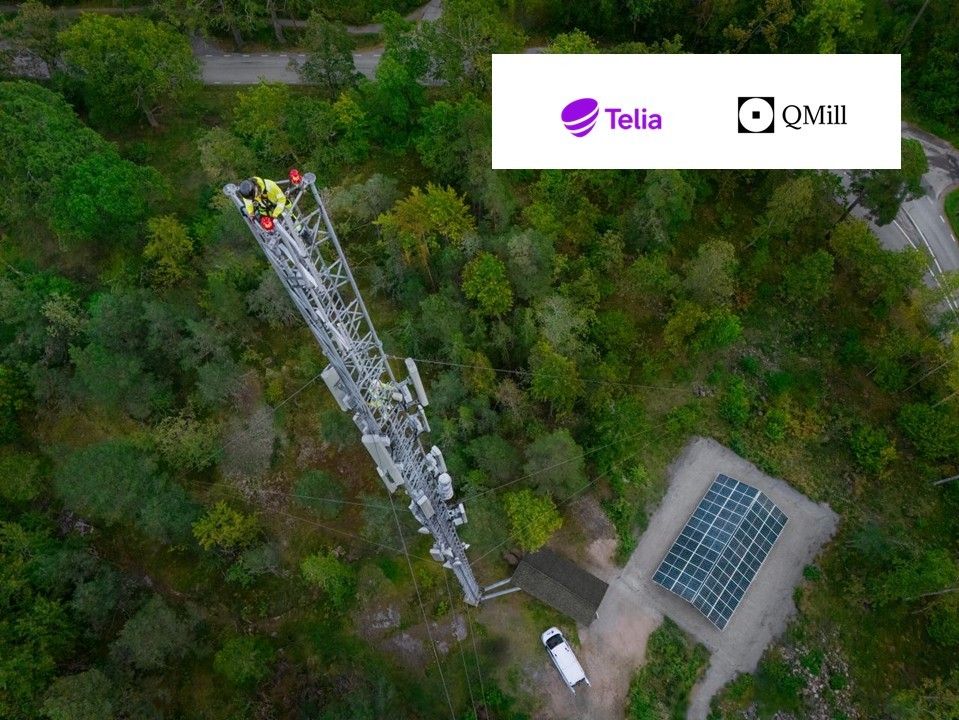
Together with Telia, we developed quantum-powered message encryption for mobile networks and showcased it to the Finnish Defence Forces over a live network.
Learn more
Our approach fits the industry's shift toward crypto-agility: building systems that can add or swap in stronger cryptographic modules as new threats and standards emerge, rather than treating migration as a one-time fix.
Why it matters now
The capabilities of quantum computers are rapidly evolving, and are projected to culminate in the so-called Q-Day, when their computational power will be sufficient to break today’s encryption methods.
Q-Day is projected to occur within a decade, but many forecasts believe it could happen before 2030. Meanwhile, sensitive encrypted data is already being collected and stored, a practice known as ‘harvest now, decrypt later’, ready to be unlocked once that day comes.
Many national and institutional bodies are therefore now recommending a full transition to quantum-safe cryptography by the end of the decade. New quantum-safe standards are already being rolled out, but they rely on the hardness of a certain type of classical-computing task. QMill adds the missing layer: security based on the hardness of quantum computing for classical devices and the loss of information in the collapse of the quantum state during its measurement, without the need for a dedicated quantum communication infrastructure.
Do you want to know more about our Quantum Security methods and collaboration opportunities?
Latest news
September 28, 2026
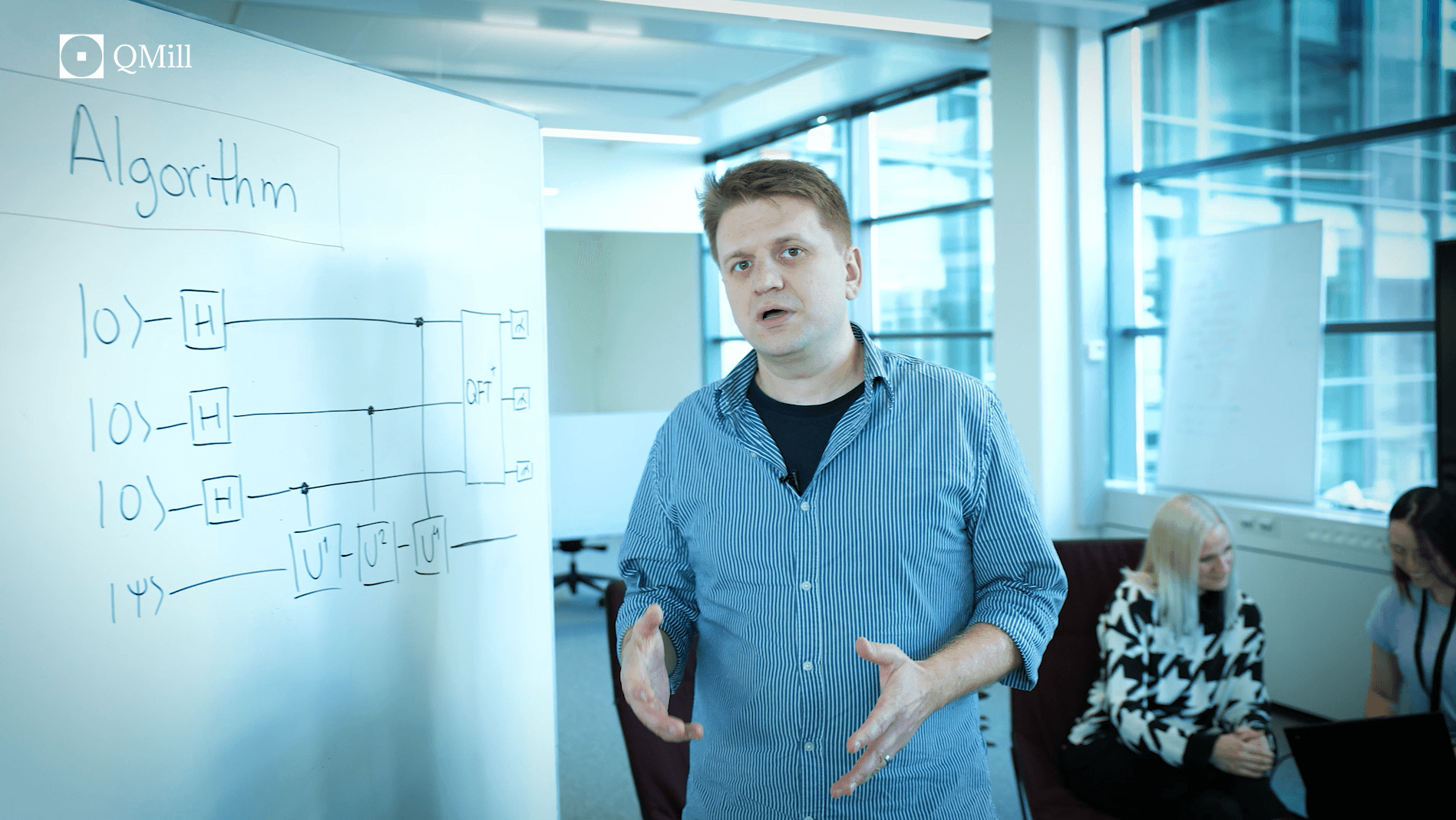
Video: Quantum-powered security
QMill Quantum Security adds an extra layer of security for critical infrastructure (1min).

August 26, 2026
The dream of quantum computing is both dead and alive
Our Chief Scientist, Professor Mikko Möttönen, is featured in a Bloomberg article, telling his story as a co-founder of IQM in 2018 and then QMill in 2024.

August 21, 2026
Will quantum overtake AI? Two experts weigh in
Mikko Möttönen was interviewed by Mouser for their quantum computing content series, discussing how quantum and AI compare, and where each is headed.

July 29, 2026
How qubits set quantum computers apart
Professor and QMill Chief Scientist Mikko Möttönen sheds light on quantum computing and the scientific foundations behind QMill's solutions.

QMill makes a near-term case for stronger security in existing communications networks.

June 23, 2026
Compressing Shor's Algorithm
Bryan Siegelwax had a chance to play with QMill Circuit Compression and got an unexpected outcome.
QMill participated in the pioneering Quantum Hack as both a challenge and tech partner. QMill challenge attracted many participants, who worked on the challenge through the QMill Quantum Advantage Services platform.

To the lengthening list of names that could help telcos with their quantum-safe networking strategies, add QMill.

Press release: Telia and QMill demonstrate a new quantum-enhanced data encryption method for mobile networks

Press release: ESL Shipping has partnered with QMill to assess quantum computing suitability for optimization problems.

Funding granted for ESL Shipping in optimization and QMill in algorithm R&D.

May 19, 2026
What’s a quantum computer good for, anyway?
Scientific American mentions QMill's AI powered circuit compression as an example of pragmatic tooling, and frames quantum computing quantum computing as big potential tempered by hard engineering realities.

May 12, 2026
Finnish invention accelerates quantum revolution
The results of research work are being commercialized very quickly in the field of quantum technology. Professor Möttönen selected as finalist in the prestigious European Inventor Award.

European Patent Office announced Mikko Möttönen as a finalist in the ‘Research’ category of the European Inventor Award 2026.

April 22, 2026
Forget about AI – This is the next big revolution
Quantum computers are starting to change from science fiction to reality. It is now high time for companies to prepare for the future.